

Risk Management · 2025
In this section3 topics
Risk Management Policy & Plan
Main Introduction
The Group Management Committee has established the policy and enterprise risk management process from top management to operational and supporting functions for the purpose of evaluating and managing the Group’s risk factors.
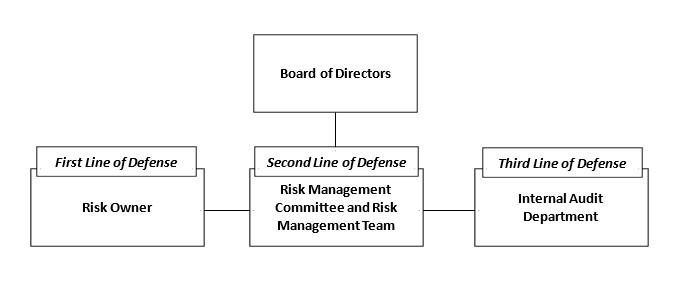
The Group Management Committee has appointed a sub-committee, namely the Risk Management Committee (“RMC”) a six-member team comprising the President, Executive Vice President (Group Commercial), Executive Vice President (Group Finance and Accounting), Senior Vice President (Group Head of Human Resource, Administration, Business Transformation, Business Process Management, ESG, IR and Comm & Branding), Vice President (Ship Management) and Vice President (Group Information Technology). The Risk Management Committee is responsible for controlling and managing the risk management process through risk assessment and analysis, risk classification, operation risk, conclusion and monitoring the result of risk management related to the business operation to drive the business sustainability.
The RMC has identified four (4) major risk areas that may adversely affect our Group’s business and performance consisting of:
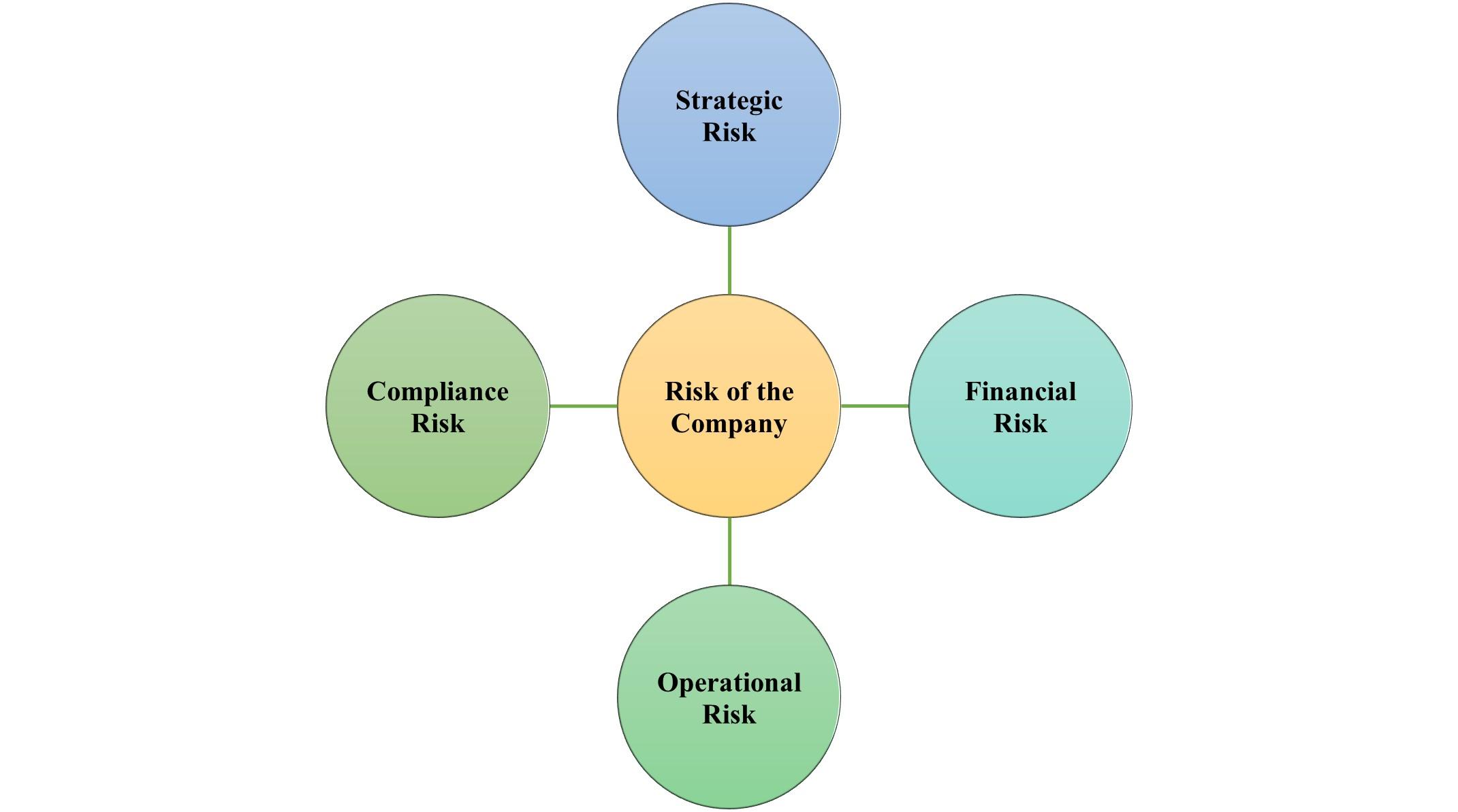
In 2025, the RMC conducted four (4) meetings to address the Company’s risks in major functions to prevent and mitigate the risks. Example of topics discussed at the meetings were ship management, ship/port operation, voyage optimization, finance, human resource, information technology and etc.
Sub Introduction
The Company established the risk management policy to provide standardized Enterprise Risk Management (“ERM”) framework for executive management and all employees as listed below:
To manage enterprise risk and mitigate residual risk with acceptable levels by establish guideline to manage risk effectively and/or minimizing potential risks while staying consistent with the Company’s strategies, goals and objectives.
To clearly define duties and responsibilities for risk management activities to facilitate effectiveness and efficiency for decision-making and oversight in managing risks.
To enhance and promote awareness of risks throughout the organization and embed the risk management practices into the Company’s culture to ensure ongoing engagement and compliance.
Policy & Plan Description
The Company’s risk management policy can be summarized as follows
Enterprise Risk Management Framework
In order to ensure that ERM is in accordance with the appropriate framework of international standards, COSO ERM 2017 has been adopted as a basic principle to define the process of enterprise risk management and supervision services. 20 activities under 5 components as follows:
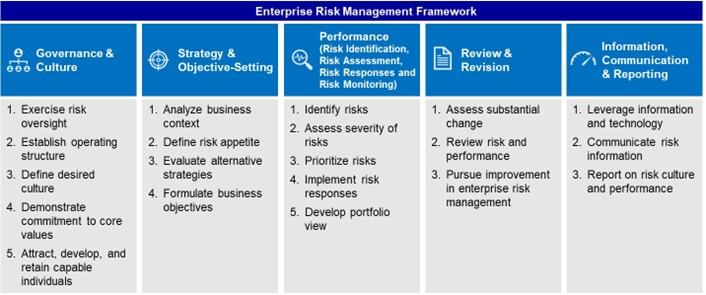
1. Governance and Culture
Governance sets the company's tone, reinforcing the importance of, and establishing oversight responsibilities for ERM. Creating a culture of risk instills transparency and awareness of risks into company culture requires action, such as consulting with each other or other mechanisms to share information.
2. Strategy and Objective-setting
ERM, strategy, and objective setting work together in the strategic-planning process. A risk appetite is established and aligned with strategy. Business objective puts strategy into action while serving as a basis for identifying, assessing, and responding to risk.
3. Performance
Identifying ERM in accordance with the risk categories by considering which risks are related to the strategy, finance, system, compliance, or operation (Risk Universe), and assessing the severity of the risk using historical databases. Prioritize risk management for the organization so that it can be used to formulate a risk management/response plan linked to internal control. It is also developed into a Portfolio View of Risk in order to be able to analyze and manage risk in the entire process and achieve the company's goals.
4. Review and Revision
The effectiveness of ERM is assessed and reviewed at least once a year and/or in conjunction with substantial changes to ensure the risks are under control.
5. Information, Communication and Reporting
ERM requires a continual process of obtaining and sharing necessary information, from both internal and external. Risk culture and performance are reported semi-annually throughout the company.
Enterprise Risk Management
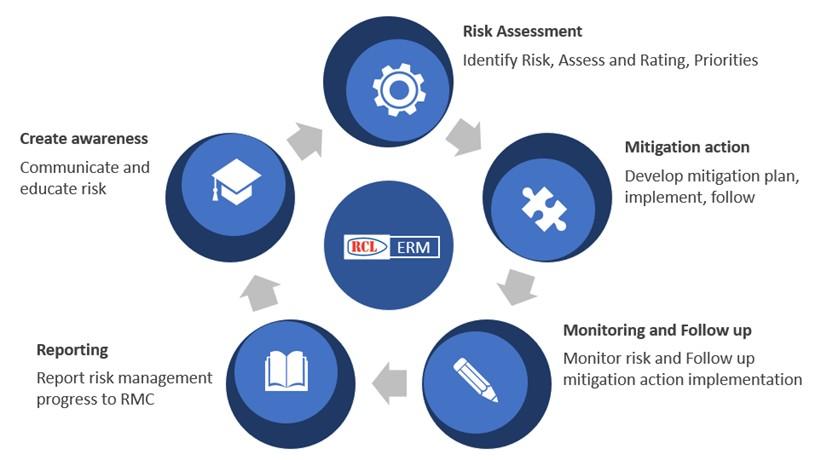
To ensure that the Enterprise Risk Management process is designed to cover the minimum action while aligning with standard practice. The COSO ERM activities are concluded / summarized to be the RCL’s ERM management in mainly 5 steps/activities. The details as shown in below figure;
Risk Management Tool
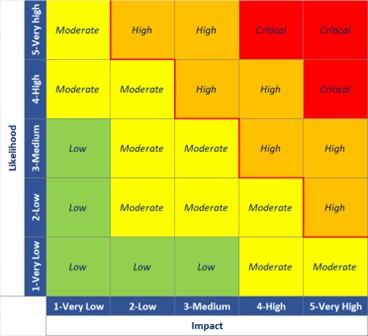
A risk matrix is a grid/tool that helps organizations evaluate/rate risks by categorizing them according to two main factors: likelihood (probability) of occurrence and impact (severity) of consequences.
This structured approach allows risk champion/responsible teams to identify, assess, and prioritize risks effectively, ensuring that the most significant threats are addressed appropriately.
RCL’s ERM risk matrix is a 5 X 5 risk matrix, reflected in table below;
Policy Document Link
https://www.rclgroup.com/RiskManagement
Risks to the Company's Business Operations
Introduction
During 2025, RCL continued to manage a range of operational risks inherent in container shipping activities. The Group’s risk environment remained shaped by global supply chain conditions, weather-related disruptions, and varying port efficiencies across our network. Despite these structural challenges, the Company made meaningful progress in strengthening operational robustness, enhancing stowage safety, improving coordination with terminals, and reinforcing schedule reliability through technology and process upgrades.
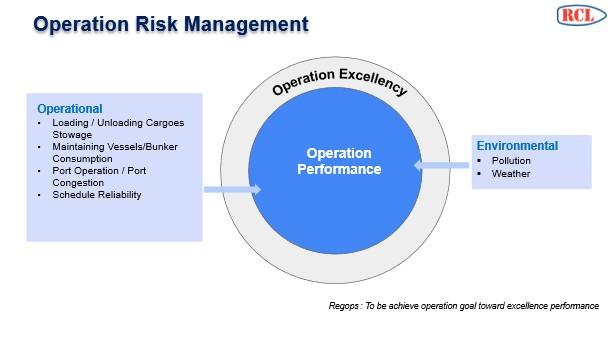
The following provides an overview of the key operational risks, their impact on the business, and the mitigation measures implemented throughout the year.
Risk Register
| Risk Name | Risk Characteristics | Consequences | Management Measures | Related Risk Factors | ||||||||||||||||||||||||
|---|---|---|---|---|---|---|---|---|---|---|---|---|---|---|---|---|---|---|---|---|---|---|---|---|---|---|---|---|
| Strategic Risk | 2025 was a significant year geo-politically wise, with the US no longer the gentle and generous hegemon it was since World War 2. This will likely reshape much of the alliances from business, political, social and cultural alliances between and amongst countries going forward, as historical institutions and assumptions evolve and change into the foreseeable future. | There is less international cooperation on many issues and selective cooperation on some of common interests, which unfortunately will result in even larger fluctuations and variations in positive or negative outcomes, when they do occur for the container shipping business. In addition, seasonal and longer-term changes in supply chain sourcing as a consequence of geo-politics may also have affected trade volumes in some corridors with near-shoring and on-shoring of supply chain activities. | To mitigate the risk and enhance resilience and adaptability in the container shipping industry, the Group focuses on diversification of markets and supply chains, avoiding over-reliance on specific regions or trade lanes by expanding services to emerging and alternative markets. Additionally, strengthening regional cooperation and partnerships is a key strategy, involving participation in regional initiatives, port alliances, and infrastructure projects. The Group is also implementing agile capacity management to match capacity with shifting trade volumes while utilizing vessel-sharing agreements and partnerships to mitigate risks and maintain operational flexibility. A crucial aspect of this strategy is dynamic capacity management, which includes reallocating vessels and containers to regions with increasing demand. During periods of low demand, blank sailings are utilized to prevent overcapacity and maintain profitability. RCL also secures longer-term contracts with customers to ensure stable trade volume even during periods of uncertainty. Furthermore, data and analytics are leveraged to develop predictive models to optimise routing and capacity deployment base on geopolitical trends. | 737 · Other name: Geopolitics, economic fragmentation and reduced global cooperation · Description: Other · Info category: STRATEGIC_RISK | ||||||||||||||||||||||||
| Strategic Risk | With focus on cost savings and more direct calls fueled through new ship deliveries in 2025 and container terminals that can accommodate larger ships, we will see more main line operators continue to shift from third party feeder usage to their own ships for the first leg or last mile connectivity. | Alliance changes announced in 2024 including Hapag Lloyd and Maersk coming together in the new “Gemini” will result in the loss of SOC volumes for RCL as Hapag Lloyd migrates their transshipment volumes to Tanjong Pelepas (Malaysia) from Singapore. While MSC and Evergreen will shift their hubs back to Singapore. Both are less reliant on common feeders and mostly use their own network to serve most of their needs. | To maintain competitiveness and enhance operational efficiency, the Group is committed to strengthen relationships with new and existing partners by building strong alliances, ports and logistics providers to maintain competitiveness. This includes fostering closer collaboration with MSC, Evergreen and key customers who are shifting operations back to Singapore. Additionally, RCL’s management team is also placing a strong emphasis on NVOCC partnerships, securing long-term contracts with NVOCCs. By offering competitive rates for SOC services, which are widely utilized by NVOCCs, RCL aims to create dedicated services package and priority loading/unloading to increase efficiency for NVOCC customers. | 737 · Other name: SOC business remains under pressure · Description: Other · Info category: STRATEGIC_RISK | ||||||||||||||||||||||||
| Strategic Risk | The US and China rivalry is likely to continue with a new US President, who in his previous term in office was very unpredictable. We may see more extreme forms of policies from tariffs and regulatory limitations coming into play. In addition, there is also a risk of military engagement as an extension of diplomacy | There could be risks of military engagement in the South China Sea over Taiwan, where China has drawn a red line on Taiwan being a part of China. The South China Sea is also a very busy shipping lane, even more so than the Suez Canal. The impact will be much larger compared to what is happening with the Suez Canal today. | Scenario planning and ability to respond in a “what if” situation in what is now a foggy and complex world. | 737 · Other name: US and China rivalry continues · Description: Other · Info category: STRATEGIC_RISK | ||||||||||||||||||||||||
| Strategic Risk | With Asia, Indian sub-continent, Middle East and East Africa enjoying higher growth and accounting for a larger percentage of global GDP, global carriers will also focus their resources and expansion into this RCL’s area of operations. | Our competitors are also reading the same statistics as RCL is and harbouring the same ambitions. The market could be more competitive if there are more competitors. | To enhance service efficiency and market reach, the Group is focusing on expanding and optimizing its regional network coverage by strengthening and expanding RCL’s network to provide better connectivity and routing options. By optimizing vessel deployment, RCL aims to balance capacity with demand across high-growth corridors. Besides, RCL is also leveraging on regional knowledge and presence by investing in local offices and relying on-the-ground teams to provide direct support to customers and partners. A strong regional presence would boost competitivity with global operators. | 737 · Other name: Economic shift from the Trans-Atlantic to the Asia-Indian sub-continent and Middle East – Africa world · Description: Other · Info category: STRATEGIC_RISK | ||||||||||||||||||||||||
| Strategic Risk | RCL has competed in South East Asia and North Asia markets. These markets have low barrier to entry and we also see many previously niche competitors coming out to compete in Intra and South East Asia. | South East and North Asia can be very competitive at times through new capacity being shifted from other trades of North Asia such as China-Japan and China-Korea. | Geographical diversification and exposure to the faster growing economies of the Indian sub- continent, Middle East, East Africa, Mexico and even the Red Sea will help in a more balanced portfolio by providing RCL exposure to faster growing markets and reduce its traditional dependency on South East Asia and North Asia markets. | 737 · Other name: Geographic diversification · Description: Other · Info category: STRATEGIC_RISK | ||||||||||||||||||||||||
| Strategic Risk | New ship delivery in 2026 will grow at 3.5-4% with an increase of almost 1.6m TEUs and 218 ships (Source: Alphaliner Monthly January 2026) The diversion of ships around the Cape of Good Hope since 2024 continues to absorb about 2m TEU of container capacity with its longer sailing times. | New ship supply exceeds GDP and container growth rates. The potential end of sailings around the Cape of Good Hope will result in more ships being made available and increase supply while reducing time charter rates potentially. | To mitigate the risk and enhance operational efficiency, RCL implemented capacity management through flexible deployment, avoiding overcapacity by dynamically adjusting vessel deployment based on demand. By redeploying vessels to high-demand trade lanes, such as Intra-Asia and Asia–Middle East routes, the Group is able to balance global capacity, preventing overcapacity while optimizing service efficiency. Along with the above, capacity optimization through fleet adjustments is a key strategy to align fleet capacity with market demand to prevent overcapacity and maintain profitability. This includes idling or retiring older, less fuel-efficient vessels to reduce fleet during low demand. For this, the Group took into consideration temporary vessel lay-ups (taking ships out of service) on routes where capacity exceeds demand. | 737 · Other name: Cape of Good Hope diversions in 2025 · Description: Other · Info category: STRATEGIC_RISK | ||||||||||||||||||||||||
| Strategic Risk | Climate change continues to wield its impact on container shipping with more violent, longer and extreme weather impacting vessel schedules and integrity. It has typically resulted in vessels bunching at key terminals including transshipment hubs around the world, resulting in terminal congestion. Terminals are struggling to cope with untimely schedules at their terminals, made worse by the fact that many ships are now longer and wider as well. Terminal congestion, while reducing capacity, also resulted in loss of sailings to the trade sectors. | Delays, lost voyages in a calendar year and poorer schedule integrity that will affect supply chains. Potentially, there could be lost revenue as a result of fewer sailings within the year 2025 | To enhance schedule flexibility and contingency planning, RCL developed contingency plans for alternative ports and routes and implemented buffer times in schedule to cushion, without severely impacting terminal operations. Furthermore, the Group invested in weather monitoring and predictive analytics. By integrating advanced weather forecasting systems into fleet management platforms, the predictive models are used to adjust sailing speeds and routes in response to extreme weather threats. | 1719 · Description: Climate change and disasters · Info category: STRATEGIC_RISK · 737 · Other name: Climate change, terminal congestion affecting container shipping · Description: Other · Info category: STRATEGIC_RISK | ||||||||||||||||||||||||
| Financial Risk | Our Group’s revenues are based on the US Dollar via an established pricing mechanism. Freight rates are quoted in US Dollars whilst freight revenues are collected either in US Dollars, or in the corresponding amount of loading port currencies. Our Group’s operating costs are predominantly in US Dollars with the balance proportionately distributed among major loading port currencies (such as Thai Baht and Singapore Dollar). | Currency fluctuation has been the main key concern throughout 2025 despite the gradual reduction in interest rate due to geopolitical issues. Nevertheless, the risk from the currency fluctuation did not have a major impact on our cash flow from operations, due to the fact that our assets, for example, container vessels were bought and sold in US Dollars. Furthermore, our loan portfolios, as well as fixed assets are mainly in US Dollars denomination. With the exception of certain accounting translation effects, our Group has been able to enjoy a natural foreign exchange hedging. | 764 · Description: Fluctuation in exchange rates, interest rates, or the inflation rate · Info category: FINANCIAL_RISK | |||||||||||||||||||||||||
| Financial Risk | Interest rate is another factor that impacts our cost of funds. Our Group’s total borrowings as at year ended 2025, increased as a result of our long-term loans which amounted to Baht 13.0 billion, as compared to that of Baht 9.5 billion at the end of year 2024. The rise was due to the increase in financial exposure, consequential to the delivery of new vessels to replace some of our old vessels and to carry out our expansion programme in fleet size. With more acquisition of vessels, higher borrowings would logically increase the cost of our borrowing/fundings. However, this effect was cushioned by the reduction in interest rate mentioned below. | Interest rates have gradually reduced throughout 2025. The reduction in interest rates arose from the loosening monetary policy to stimulate the economy. The gradual decrease in interest rate contributed to the lower cost of fundings, while at the same time also resulted in diminishing interest income for our group. | Our long-term loans are at a floating rate, leaving us in a positive position in the diminishing interest rate trend. Nevertheless, we expect the interest rate will rise in the longer term, and therefore has the direction to mitigate our risk exposure by targeting to maintain the exposure to the level of 50:50. In 2025, we have entered into interest rate swap transactions to fix some parts of our exposure, and as at end of 2025, our interest rate proportion between the fixed: float is at 47:53. Meanwhile, despite low interest environment, we try to maintain our interest income by investing into low-risk investment tools that yield an acceptable return. The Group’s interest income reached Baht 584.5 million as at year ended 2025 when compared to that of Baht 468.1 million in 2024. | 764 · Description: Fluctuation in exchange rates, interest rates, or the inflation rate · Info category: FINANCIAL_RISK | ||||||||||||||||||||||||
| Financial Risk | Vessels are the Group’s key fixed assets and resources for operation. The value of vessels fluctuates according to the global economy - appreciates with the upturn and adversely drops with the downturn. Another factor that recently influenced the vessel valuation is the industry requirements to comply with the environmental policies. Vessels that are equipped with engines that has the readiness to adopt or comply with environmental standard, will attain a higher value compared to those with conventional engines. | Our financing amount and the cost of financing is based on the value of the Vessels. The demand of the Vessels impacts their value. Vessels that comply to the standard or with the size that meets the requirements are expected to maintain their value better. The deteriorating value of any vessel will require replenishment to meet the financing requirement. | We are in the process of renewing our fleet. The key considerations for the renewal are not only to meet our business needs but also to meet the upcoming standard requirement of the shipping industry. Our new vessels are equipped with suitable engines that meet the future industry standards and supports our business for the next 20 years, thus mitigating the chances of vessel value plunge. | 767 · Other name: Vessel Valuation Risk · Description: Other · Info category: FINANCIAL_RISK | ||||||||||||||||||||||||
| Financial Risk | The Group’s continuous healthy financial position for the past few years resulting from the excellent operating performance, has supported the Group in upholding a strong financial position and enabling us to attain a modest cost of fund, which thus reduced the funding risk. | With the direction to renew our fleet, expanding our business coverage, as well as complying to the IMO regulations, the Group is obligated to invest in new vessels. The Group needs to leverage and take up financing to ensure we achieve this business direction. Without healthy operating results, credible business track record, or a reliable management team, the Group would be exposed to funding risk which will obstruct the business direction. | The Group has been closely tracking our financial health to evaluate our financial status; ensure we are not over-exposed to financial risk and comply with our financing obligations. The key financial ratios to monitor our financial risk are the Debt- to-Equity Ratio and the Interest Coverage Ratio. We have been observing and maintaining these key financial ratios throughout 2025 at a level higher than the industry average. | 767 · Other name: Funding Risk · Description: Other · Info category: FINANCIAL_RISK | ||||||||||||||||||||||||
| Operational Risk | The Gulf of Guinea is known to be a high-risk area which includes the entire exclusive economic zones (EEZs) of Togo, Benin, Nigeria and Cameroon, as well as parts of the EEZs of Sao Tome & Principe and Equatorial Guinea. The main regions where maritime operators are of most concerned remain around the coastal line off Nigeria, particularly off the Niger Delta, where criminal gangs may carry out attacks at any time, most likely aimed at kidnapping crew members The Persian Gulf—connected to the Arabian Sea through the Strait of Hormuz—is one of the world’s most strategically critical maritime regions. It handles a significant portion of global oil and liquified natural gas (LNG) exports, with around 20% of global oil exports transiting the Strait of Hormuz, a narrow waterway only 21 nautical miles (39 kms) wide at its narrowest point. Most Gulf nations depend almost entirely on these eastern seaborne routes for their energy exports and imports, making maritime continuity vital for regional and global economies. | Summary of 2025 Incident Reports in West Africa (War Listed Area – Gulf of Guinea)
Persian Gulf (for War Zone Shipping Operations)
| For RCL’s chartered-out vessels operating in the Gulf of Guinea, Master and crew are encouraged to implement and maintain additional security measures, recommended by the recognized maritime organizations, including embarkation of armed security personnels and the escort of security vessel. The risk of property damage and loss of lives increases. As such, insurance covers must be put in place before entering high-risk areas. Three (3) vessels from the RCL Fleet were trading in these regions under these conditions. All of the crew members were properly trained, and safety protection equipment were installed in accordance with the guidelines set forth in "Best Management Practices to Deter Piracy and Enhance Maritime Security in the Red Sea, Gulf of Aden, Indian Ocean, and Arabian Sea (BMP5)." So far, all is going well for RCL in this respect. Mitigation Measures for Ship Operations in the Persian Gulf
| 755 · Other name: Maritime security in War Listed Areas (West Africa) And War Zones · Description: Other · Info category: OPERATIONAL_RISK | ||||||||||||||||||||||||
| Strategic Risk | By the end of March 2026, the IMO Data Collection System (DCS) is expected to publish the Carbon Intensity Indicator (CII) ratings for 2025. If a vessel receives a rating of E in any given year, it must develop and implement improvement measures to achieve a rating of C or higher in subsequent years. Failure to submit the required corrective action plan for verification will prevent the vessel from obtaining its Statement of Compliance (SoC). | Improving a vessel’s CII rating from E to C is particularly challenging, especially for older ships. While the installation of Energy Saving Devices (ESDs) can help enhance efficiency, they often need to be combined with multiple operational and technical measures to achieve the required improvement. Alternatively, switching to lower carbon or alternative fuels can significantly improve the rating, but such conversions require substantial capital investment. | Based on the calculated Carbon Intensity Indicator (CII), ships are assigned a rating from A to E, which is reflected in the vessel’s Statement of Compliance. RCL’s fleet preliminary CII scores for the year 2025 are summarized below, with official results expected to be released in May 2026.
Although the fleet’s total deadweight tonnage increased by 3.05% in 2025 compared to 2024 as a result of fleet expansion, analysis showed that the fleet’s overall CO2 emissions intensity decreased by 16.82% (measured in gCO2e per deadweight-mile). This improvement reflects the effectiveness of the company’s fuel-efficiency initiatives and the implementation of well-managed strategies aimed at reducing fuel oil consumption. Furthermore, ClassNK, having been authorized by the Administration, serves as the recognized organization responsible for verifying this measurement and ensuring compliance with the applicable regulatory requirements. | 1717 · Description: ESG risk · Info category: STRATEGIC_RISK · 737 · Other name: Fuel Usage Affecting the Carbon Intensity Indicator (CII) for Aging Vessels — Continued from 2023 · Description: Other · Info category: STRATEGIC_RISK | ||||||||||||||||||||||||
| Strategic Risk | For container ship owners, environmental, social, and governance (ESG) risks are intensified by the industry's massive carbon footprint, complex global regulations, and the unique challenges of managing crews at sea for long periods. |
The shipping industry accounts for approximately 2.2% to 3% of global CO2 emissions, and container ships are among the largest contributors. Emission Regulations: Owners face immense pressure to comply with the IMO 2023 Greenhouse Gas Strategy, which aims for net-zero by 2050. Non-compliance with metrics like the Carbon Intensity Indicator (CII) or the Energy Efficiency Existing Ship Index (EEXI) can lead to fines or vessels being barred from certain ports. Carbon Pricing: Ship owners operating in Europe must now pay for their emissions through the EU Emissions Trading System (EU ETS), adding a direct financial cost to every voyage. Marine Pollution & Biodiversity: Risks include ballast water discharge (transferring invasive species), oil spills, and the loss of containers at sea, which introduces physical pollutants into the ocean.
The "Human Element" is often the most critical social risk for ship owners. Seafarer Welfare: Risks include excessive contract lengths (trapping crews at sea beyond 11 months), wage theft, and mental health issues such as depression and social isolation. Safety & Piracy: Container ships are vulnerable to piracy, particularly in high-risk zones, which poses a direct threat to crew physical safety and mental health. Modern Slavery: Supply chains are scrutinized for forced labor, especially during recruitment where informal brokers may charge illegal fees to seafarers.
Governance risks in shipping often center on the complexity of international operations. Anti-Corruption: Shipping is highly susceptible to bribery and "facilitation payments" during port-state inspections or customs clearances. Sanctions Compliance: Owners must navigate a rapidly changing landscape of international sanctions (e.g., against specific nations or entities). Trading with blacklisted parties can lead to frozen assets and severe legal penalties. Data Security: As shipping becomes more digital ("Shipping 4.0"), cybersecurity vulnerabilities have become a top governance risk, with the potential to paralyze entire global supply chains. Summary of Key ESG Risks
| To protect a container ship fleet from ESG-related losses, owners should implement a multi-layered mitigation strategy that blends operational changes with legal and technological upgrades.
Operational Optimization (Slow Steaming): Reducing vessel speed is the most immediate way to lower fuel consumption and improve carbon intensity indicator (CII) ratings. Retrofitting & ESDs: Installing Energy Saving Devices (ESDs) like Propeller Boss Cap Fins (PBCF) or Air Lubrication systems to reduce drag and emissions. Green Finance & Incentives: Utilizing Green Loans or sustainability-linked financing that offers lower interest rates if the fleet hits specific CO2 reduction targets. Port Incentive Schemes: Registering vessels with the Environmental Ship Index (ESI) to receive discounts on port dues in major global hubs.
High-Speed Internet: Mitigate crew turnover and mental health risks by providing high-speed internet connectivity, allowing seafarers to stay connected with families. Fair Recruitment Audits: Perform strict due diligence on Manning Agencies to ensure compliance with the Maritime Labour Convention (MLC), specifically prohibiting "recruitment fees" charged to seafarers. Safety Training: Implement enhanced anti-piracy measures and rigorous safety drills to reduce the risk of on-board accidents and litigation.
BIMCO ESG Clauses: Update charter party agreements using BIMCO’s ETS Clauses. This legally shifts the financial responsibility of carbon allowances (EU ETS) from the owner to the charterer. MACN Membership: Join the Maritime Anti-Corruption Network (MACN) to gain collective bargaining power and protocols for refusing "facilitation payments" (bribery) at ports. Cyber Resilience: Aligning with the NIST Cybersecurity Framework to protect shipboard Operational Technology (OT) from ransomware that could freeze fleet operations.
Summary Mitigation Table
For a container ship owner, ISO 14001:2015 is the global gold standard for an Environmental Management System (EMS). It provides a systematic framework to manage environmental responsibilities, specifically helping mitigate the "E" in ESG. By 2026, RCL Shipmanagement Pte. Ltd., the ship management arm of RCL Group, plans to meet this standard. | 1717 · Description: ESG risk · Info category: STRATEGIC_RISK | ||||||||||||||||||||||||
| Operational Risk | Throughout 2025, the global shipping industry continued to face significant operational and safety risks from undeclared or mis-declared dangerous goods, a trend confirmed by regulatory bodies, insurers, and investigative reports. According to the World Shipping Council (WSC), port-state inspections revealed that more than 11% of containers examined showed safety deficiencies, including mis-declared and undeclared DG, posing a mounting threat of shipboard fires and other accidents. WSC noted that improper documentation, incorrect packaging, and DG misdeclaration directly increase the likelihood of major container-ship fires and complicated stowage planning and emergency response. | Several notable container-ship fire incidents (not RCL Ships) occurred in 2025, many of which involved hazardous or undeclared cargo as documented by maritime casualty reports.
| Mitigation Measures and Preventive Actions:
| 755 · Other name: Fire Originated from Undeclared Dangerous Goods · Description: Other · Info category: OPERATIONAL_RISK | ||||||||||||||||||||||||
| Operational Risk | A power failure on a container ship-often referred to as a blackout-is a critical event that can immediately compromise safety, cargo integrity, propulsion, navigation, and overall ship operations. Container ships rely heavily on electrical power to operate essential systems, including propulsion auxiliaries, navigation, steering, container refrigeration, and communication. Causes of Power Failure - include
| The consequences can escalate rapidly - especially when the ship is navigating confined waters, operating near port infrastructure, or carrying a large number of perishable reefer containers. Loss of propulsion and steering increases the risk of collision or grounding, while failure of reefer power supply may lead to cargo spoilage and substantial financial claims. As such, understanding the full scope of consequences arising from a power failure is essential for strengthening preventive measures, ensuring crew preparedness, and maintaining safe and reliable maritime operations.
| Mitigation Measures and Preventive Actions
| 755 · Other name: Power Failure · Description: Other · Info category: OPERATIONAL_RISK | ||||||||||||||||||||||||
| Operational Risk | Safe and effective stowage planning is fundamental to the operational integrity of RCL’s fleet. All stowage activities must ensure that every vessel maintains proper stability, trim, structural stress compliance, and full seaworthiness. These operations are carried out in strict accordance with the International Cargo Securing Manual, load line regulations, container stacking weight limits, and IMO rules governing line-of-sight visibility from the navigation bridge. The management of reefer units, special cargoes, and hazardous cargoes under the IMDG Code remains a critical element of our safety regime. Throughout 2025, RCL achieved zero stowage incidents, zero near-misses, and zero DG (Dangerous Goods) non-conformities, demonstrating the robustness and effectiveness of our control environment. Stowage planning continues to be one of the core operational objectives for all container vessels in the RCL fleet. Effective risk management is applied to every cargo-handling activity to ensure the vessel’s seaworthiness and cargo security at all times. Cargo must be stowed and secured in a manner that prevents movement under severe weather conditions, with full consideration of the following key criteria: Key Stowage and Safety Criteria • Safety Criteria, Cargoes Securing Manual • Stability, Trim, Stress • Load line, Stacking weight, IMO Line of Visibility • Reefer Containers and Other Special Units • Sequence of Loading and Discharging • Hazardous Cargo as IMDG: Dangerous Goods carried on containerships shall be stowed safely. | This risk may lead to vessel stability issues / Major Marine casualty | This achievement was driven by significant enhancements to the Company’s stowage planning platform, which now delivers greater planning accuracy and more reliable stability calculations. Dangerous Goods (DG) validation processes were also strengthened through the upgraded Hazchk system at the office level, with full integration scheduled for 2026. Operational discipline was reinforced through mandatory training for new planners, continued pre-sail verification of pre-plans and final stowage plans, and the introduction of operational audits focused specifically on stowage compliance. Lashing and securing procedures were closely monitored to ensure strict adherence to the Cargo Securing Manual. Collectively, these measures heightened risk awareness, improved the consistency of cargo-handling practices, and upheld the highest safety standards across the fleet. Based on the overall objective, six sub-goals have been established, each supported by clearly defined functional requirements. To meet these requirements, risk-based stowage strategies have also been developed. The following subsections described the sub-goals:
The quality of stowage operations has a direct and substantial impact on a vessel’s operational performance. Effective coordination and communication among the Central Stowage Planning Unit, local offices, terminals, and vessel Masters are essential, especially when balancing cost effectiveness with operational efficiency. Key performance indicators include vessel turnaround time, port crane productivity, and the reduction of overall port stays. These improvements, in turn, enable vessels to maintain greater buffer time at sea, operate at more economical speeds, and achieve bunker savings, an increasingly important measure of operational performance. | 755 · Other name: Shipboard Container Stowage · Description: Other · Info category: OPERATIONAL_RISK | ||||||||||||||||||||||||
| Operational Risk | Port congestion continued to be a major operational challenge throughout 2025. It was driven by a combination of high trade volumes, severe weather events, labor shortages, inconsistent productivity levels, and infrastructure limitations across key global hubs. These pressures frequently resulted in prolonged vessel waiting times, increased operating costs, and cascading schedule disruptions throughout the logistics network. Beyond these operational factors, congestion was further intensified by broader macro level influences such as geopolitical tensions, which contributed to delays, rerouting, and wider supply chain instability. | Port congestion continued to impose significant challenges on maritime transportation and the wider logistics sector, with direct impacts on delivery schedules, production cycles, and overall supply chain reliability. Several recurring factors contributed to congestion across major regional hubs, including:
Across the network, vessels recorded an average waiting time of 5.7 hours per call, based on 3,193 port calls in 2025. Congestion was notably uneven, with delays heavily concentrated at specific ports. The Top 10 most congested ports accounted for approximately 55% of total waiting hours, indicating a strong clustering effect around key bottlenecks.
Ports such as MYWSP, CNSHA, CNSHK, SGSIN, PHMNL, CNNGB, and KHKOS experienced the most significant delays, substantially contributing to overall network inefficiencies. These congestion challenges not only elevate vessel operating costs—including fuel consumption, port charges, and idle time—but also introduce operational risks and heighten the likelihood of customer dissatisfaction due to disrupted schedules and reduced reliability. | To mitigate the effects of port congestion, RCL implemented a series of proactive contingency measures aimed at reducing vessel delays and maintaining service reliability. The company enhanced coordination with terminals, port authorities, service providers, and all relevant stakeholders to improve transparency and operational alignment. Key actions included: • Daily Monitoring: Tracking average arrival and departure statistics for all ship calls to identify emerging bottlenecks early. • Congestion Dashboards: Deploying real time dashboards to monitor port conditions and support faster decision making. • Optimized Berth Planning: Coordinating vessel ETAs and improving berth allocation efficiency to reduce queuing. • AI Driven Berth Visibility: Advancing the use of AI tools to forecast berth availability and improve operational predictability. • Reduced Port Stay: Minimizing idle time through tighter operational planning and faster cargo-handling processes. • Precision Stowage Instructions: Providing accurate stowage plans to streamline loading and discharge operations. • Maximized Crane Productivity: Enhancing crane utilization and coordination to accelerate turnaround times. Through comprehensive evaluation of port operations, early problem identification, and swift corrective actions, these measures enabled RCL to better navigate congestion hotspots while ensuring continuity of service for customers. Continuous collaboration and a commitment to ongoing improvement remain central to sustaining smooth port and terminal operations across the network. In addition, RCL continues to expand its digital capabilities, incorporating AI driven solutions for berth scheduling, cargo visibility, and operational planning. These initiatives reinforce the company’s commitment to overcoming congestion challenges and delivering reliable, efficient services to customers. | 755 · Other name: Port Operation Constrain · Description: Other · Info category: OPERATIONAL_RISK | ||||||||||||||||||||||||
| Operational Risk | Schedule reliability remained a critical area of focus for the Company, as deviations from proforma schedules can undermine customer confidence, reduce operational efficiency, and disrupt fleet deployment planning. As highlighted in the previous reporting year, adverse weather conditions and port congestion continued to be the primary external factors contributing to schedule deviations throughout 2025. Congestion related delays, in particular, continued to affect overall network predictability. | In 2025, RCL recorded an annual average schedule reliability of 39%, with a December performance of 45%. This compares to an industry average of 54.74% among the world’s top 13 carriers. Strengthening reliability therefore remains essential to sustaining customer trust and maintaining RCL’s competitive position. To address these challenges, the Company continues to prioritize proactive measurement, performance enhancement, and operational resilience. | Moving into year 2026, Collectively, these actions supported improved control over operational variability, enabling the Company to manage schedule challenges more effectively while maintaining service quality amid shifting global conditions. RCL will continue focus on the following strategies in order to remain competitive and mitigate delays, in the evolving maritime industry:
By advancing these strategies, RCL aims to reinforce schedule integrity, mitigate delays from predictable factors such as weather and congestion, and deepen collaboration with key stakeholders. These initiatives will support improved customer satisfaction through consistent communication, enhanced reliability, and continued operational excellence. | 755 · Other name: Schedule Integrity · Description: Other · Info category: OPERATIONAL_RISK | ||||||||||||||||||||||||
| Strategic Risk | a. Technological Infrastructure The rapid evolution of artificial intelligence technologies presents a technology infrastructure risk, as existing systems and architectures may require careful assessment to ensure continued compatibility, stability, and effective integration. Differences in data readiness, system maturity, and dependency on external platforms may increase complexity in managing infrastructure consistently. Without appropriate governance and controlled adoption, there is a risk of fragmented implementation, increased reliance on third-party solutions, and challenges in maintaining standardized, secure, and sustainable technology environments that support long-term business operations. b. IT Costs and Talent Development As IT increasingly becomes a core enabler of business operations and service delivery, the organization faces risks related to rising IT costs and the availability of skilled personnel. The growing demand for specialized capabilities, including system integration, cybersecurity, and emerging technologies, may place pressure on operating expenses and increase competition for qualified talent. Managing this risk requires balancing cost efficiency with the need to retain and develop appropriate skills to ensure continuity operational stability. | It increases complexity and cost in supporting core business operations. Higher dependency on system integration, specialized skills, and external platforms could affect the stability and continuity of critical business systems. In addition, limitations in skilled personnel may impact the organization’s ability to respond promptly to business requirements and deliver initiatives as planned, potentially affecting operational efficiency, service quality, and long-term cost control | Technology initiatives are evaluated based on their contribution to operational effectiveness, long-term sustainability, and business continuity. At the same time, the organization strengthens its internal capabilities to ensure consistent, dependable support for business operations and long-term stability. | 732 · Description: Changes in technologies · Info category: STRATEGIC_RISK | ||||||||||||||||||||||||
| Operational Risk | While cybersecurity remains a critical concern, RCL observes that in 2025 cyber risks are increasingly driven by human behavior, digital exposure, and the use of emerging and advanced technologies by threat actors. These developments enable more realistic social engineering, improved targeting, and reconnaissance-driven attacks, while core security controls remain stable and effective. An excessive focus on restrictive controls may limit business agility if not balanced with operational needs. | a. Advance Social Engineering: More sophisticated phishing techniques increase the likelihood of credential compromise, potentially affecting system access and continuity of key business processes. b. Targeted Disruption: More intelligent and targeted attacks increase response and recovery complexity, potentially impacting operational continuity if not effectively managed. | RCL takes a proactive and business-focused approach to cybersecurity, with emphasis on preparedness, awareness, and operational continuity. The organization continuously strengthens its ability to respond to emerging risks and to maintain business stability in the face of potential disruptions. Readiness and response capabilities are reviewed regularly to ensure security supports reliable and uninterrupted operations. | 744 · Description: Information security and cyber-attack · Info category: OPERATIONAL_RISK | ||||||||||||||||||||||||
| Operational Risk | Human factors remain a key source of cyber risk, as employees regularly interact with email, digital documents, and shared systems in fast-paced operational environments. Variations in awareness, workload pressure, and judgment may increase exposure to phishing attempts, even where technical controls are in place. | There was a risk that phishing attempts could lead to misuse of credentials or inappropriate system access, which may affect the continuity, accuracy, and timeliness of business processes that rely on secure and reliable system access. | The organization addresses this risk through continuous, role-based awareness programs, practical simulations, and clear escalation channels, enabling employees to recognize threats and support secure operations without disrupting business productivity. | 755 · Other name: Cyber Attacks · Description: Other · Info category: OPERATIONAL_RISK | ||||||||||||||||||||||||
| Operational Risk | External exposure is increasing as corporate websites and other public-facing systems experience higher levels of scanning and monitoring activity. Such activity reflects broader changes in the external threat environment and the growing visibility of digital business channels. As online services expand, maintaining consistent oversight of exposed systems becomes increasingly important. | Increased external activity may raise the likelihood of potential weaknesses being identified in public-facing systems. If not adequately managed, this could affect the availability or reliability of digital channels that support business operations and customer engagement | The organization manages this risk through ongoing oversight and regular reviews to ensure systems and operations remain secure and reliable. Appropriate preventive actions and timely improvements are taken to minimize potential exposure and support stable service delivery. | 755 · Other name: Data or IT system security · Description: Other · Info category: OPERATIONAL_RISK | ||||||||||||||||||||||||
| Strategic Risk | Risks such as war, sabotage, or security threats can disrupt business operations at a macro scale. | The Company may be directly affected by its business operations in areas with risks. | For the emergency risk crises and business continuity that may occur, the Company has applied the Business Continuity Management approach to its operations, including the Business Continuity Plan to prepare for any crises or disruptions in operations such as the crisis continuity plan during the epidemic, political instability and protests, the crisis of shipping through war zones and natural disasters etc. Currently, the management has set guidelines for operation practice by implementation management systems and online systems in the work process to ensure that the business operations can be continued and reduce any potential impacts on the Company. | 737 · Other name: War Risk, Sabotage and Security Threats · Description: Other · Info category: STRATEGIC_RISK | ||||||||||||||||||||||||
| Compliance Risk | The compliance risks in the maritime container shipping industry must comply with the laws and regulations at international regional and local levels. These laws and regulations may include safety standards, environmental laws, customs laws and maritime safety regulations. Non-compliance may happen from changes in laws, different standards in different jurisdictions or lack of understanding or compliance with new legal requirements. | Non-compliance may result in fines, legal actions and restrictions on the Company’s rights and reputation, disruption of operations and negatively impact business image and opportunities. | To mitigate compliance risks, the Company has always strictly adhered to and complied with relevant laws, regulations and business standards. In addition, the Company continuously educates its employees about relevant laws or regulations in its operations and conducts regular audits and assessments to ensure compliance with all laws and regulations and improves practices to comply with relevant local and international laws, regulations and standard practices. | 758 · Description: Violations of laws and regulations · Info category: COMPLIANCE_RISK | ||||||||||||||||||||||||
| Compliance Risk | Corruption risks in maritime container shipping stem from abuse of power, position or authority for personal or other gains related to financial and/or non-financial, harming organizations and the public. These risks include bribery to speed up processes, kickbacks, collusion, procurement fraud, and conflicts of interest among employees, management, and business partners etc. | In the event of incidents related to corruption-related risks, these activities could have a significant impact on the company and its stakeholders. This may result in legal action, fines, and loss of licenses, damage to the company's reputation and customer trust, increased costs and operational delays, and potential consequences for long-term business sustainability and opportunities. | Regarding risk management related to corruption, the Board of Directors has expressed its intention to participate in the Anti-Corruption Commission (CAC) and has assigned the Executive Committee and relevant departments to implement anti-corruption guidelines. This includes establishing policies and procedures in accordance with the requirements and communicating these policies and procedures to all levels of employees, as well as to clients, business partners, and government and private sector entities. The Board expects to receive an audit and approval from the Anti-Corruption Commission's oversight department by 2026. | 758 · Description: Violations of laws and regulations · Info category: COMPLIANCE_RISK |
Risks to Securities Holders' Investment
Risk Register
| Risk Name | Risk Characteristics | Consequences | Management Measures | Related Risk Factors |
|---|---|---|---|---|
| Risk from having a group of major shareholders holding more than 25% | The major shareholders of the Company consist of the Ngow Hock Group, which includes Ngow Hock Co., Ltd., Panjamitr Holding Co., Ltd., Ngow Hock Agency Co., Ltd., and Sinthanachot Co., Ltd. Together, these companies hold 46.8% of the Company’s total issued and outstanding shares. | In the event of conflicts among the major shareholders, this may result in the failure to approve resolutions that require approval from the shareholders’ meeting on significant matters. Such circumstances may affect the Company’s ability to carry out its plans, potentially causing delays in various projects or hindering the completion of material transactions in accordance with the established schedule. | However, the Company has appointed an Audit Committee to review, examine, and carefully consider various transactions to ensure that conflicts of interest will not arise in the future and to enhance transparency in the Company’s operations. In addition, out of a total of ten members of the Board of Directors, four are independent directors and two are non-executive directors (including the Chairman of the Board). Such governance structure establishes a check-and-balance mechanism for matters requiring resolutions, thereby ensuring that the Company maintains appropriate and highly effective corporate governance. | 2970 · Description: Risk of the company having a majority shareholder holding > 25% of shares · Info category: HOLDER_RISK |